
The Software Industrial Revolution
Late 2025 marked a true inflection point in the history of AI.

Late 2025 marked a true inflection point in the history of AI. Between increased frontier model capabilities and the maturation of agentic harnesses, AI coding agents just clicked. And just like that, it just works.
Welcome to the beginning of the Software Industrial Revolution. Just like the first Industrial Revolution, this will change the world in profound and unexpected ways. But unlike the first Industrial Revolution, this one won’t take decades. It might not even take years.
Artisan software
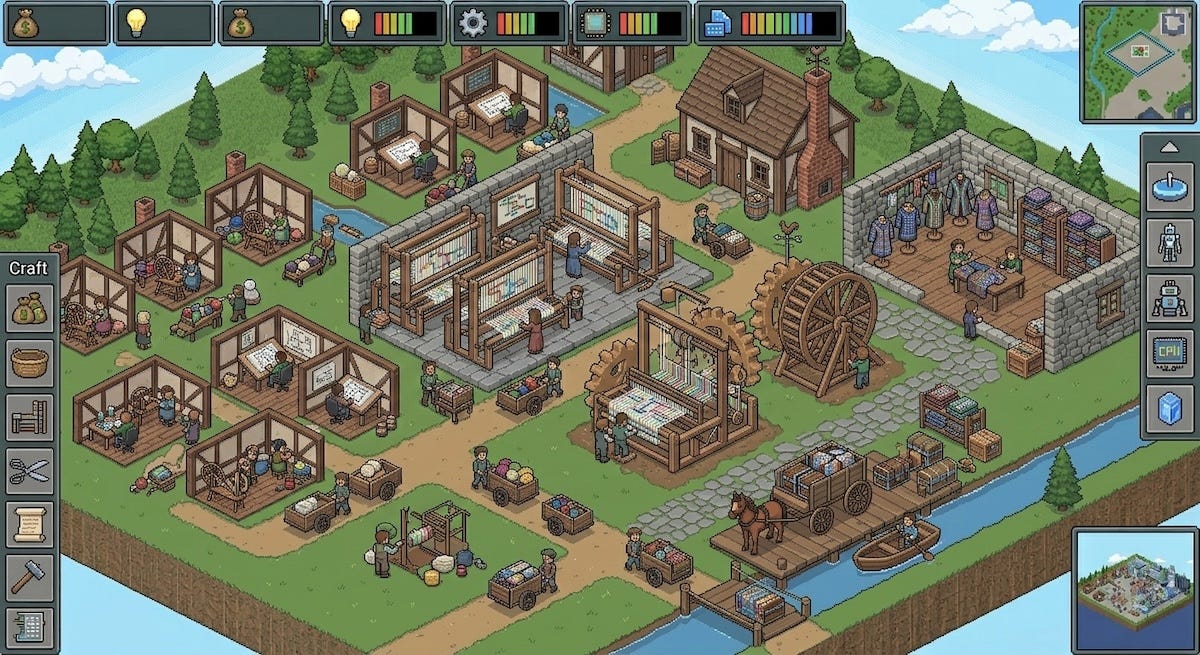
Before the 18th century, making clothes was a laborious, artisanal process, done by hand and mostly in the home. It took the work of a dozen spinners working hours every day to create enough yarn to keep one weaver busy. Because of the immense labor required, clothing was wildly expensive. Most people owned just two outfits: one for working, and one for Sundays.
The Spinning Jenny was invented in 1764 and massively parallelized what was up to this point a “single-threaded” operation. The Spinning Jenny allowed a single operator to turn a crank and spin 8, then 16, and eventually up to 120 threads simultaneously.
Over the next half century, the price of cotton cloth plummeted by over 90%. This new abundance drove the invention of the mechanized Power Loom to handle the sheer volume of inputs and the exploding demand for outputs. Automating textile production was the main driver of the Industrial Revolution - from manufacturing to energy to markets, these changes in a single industry spearheaded the biggest period of change in human history.
Fundamentally, the Industrial Revolution was about dramatically reducing the cost of production. What used to be produced in limited quantities by slow, costly manual labor could now be produced in abundance by quick, cheap automation.
Every well-compensated software engineer who writes code by hand, and anyone who’s ever had to pay extremely well-compensated software engineers to write code by hand should immediately see where this is going.
—
Some more color: In the 1700s, nails were made by hand. Blacksmiths engaged in the slow, back-breaking work of heating and extruding iron rods before hammering their ends into a point. In 1810, nails accounted for roughly 0.4% of the entire US GDP. In today’s terms, this is roughly equivalent to the entire airline industry.
Software engineering, up to this point, has been an extremely labor intensive craft. Teams of highly paid software engineers spend hours every day making and debugging brittle and expensive software by hand. And just like nails and thread, this labor consumes a massive amount of our world’s time, energy, and money.
15 years ago, Marc Andreesen declared that “software is eating the world”, and in those years it hasn’t just eaten it - it’s devoured it. A century ago, the titans of industry were, well, industrial: U.S. Steel, Standard Oil, the railroads. Today, the technology sector alone makes up roughly 35% of the S&P 500. But that’s actually underselling it. If you add in the “Communications” sector, which is where purely digital software giants like Alphabet, Meta, and Netflix are classified, that number approaches 50%.
And many non-software companies are actually software companies in disguise. The New York Times has an army of (well-paid) software engineers. Wal-Mart and Home Depot each employ thousands of (well-paid) software engineers to manage inventory and handle e-commerce, and John Deere employs hundreds of (well-paid) software engineers just to work on code embedded on their tractors. Even Wall Street itself is driven by software - from financial modeling to algorithmic trading - and Wall Street software engineers are often the most well-paid of all.
If you went back to 1950 and told a Detroit automotive executive that the most complicated, labor-intensive, and expensive part of building a car would be the invisible math that tells the windshield wipers when it’s raining, they would have laughed you out of the room. But a modern car contains upwards of 100 million lines of code. Rivian has more software engineers than hardware engineers.
Simply put: software has eaten the world, and feeding the beast costs a lot of money.
Software sucks
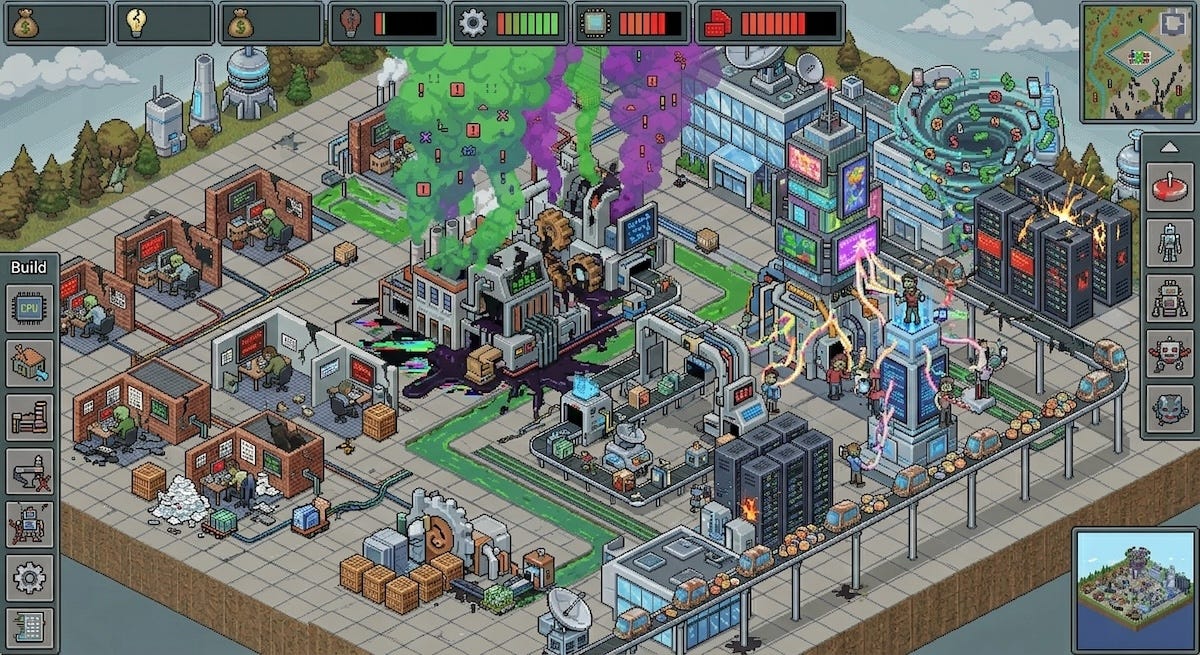
In 2007 Steve Jobs introduced the iPhone, kicking off the mobile and social eras of computing. Shortly thereafter, the 2008 Global Financial Crisis turned the world upside down, and out of this chaos came the modern software industry.
As a core millennial, I carry a fuzzy nostalgia for the “before times”. But I also remember the excitement of the early 2010s when it felt like we were going to reinvent the world - we’d connect everyone, digitize everything, and, in doing so, make the world a better place.
But it didn’t work out that way. Most people would agree that smartphones, social media, and the appification of our lives has been at best a mixed bag, and probably net negative.
And there’s no bigger reason for this than the economics of software, particularly the Venture Capital model, which quickly became the dominant force in technology (and an outsized force in global finance and politics).
VC operates on a very simple idea: it’s impossible to tell what risky bets will pay off, so spread investment around liberally. Most bets fail, a few bets succeed, and a very small set of bets succeed spectacularly. As long as that payout is big enough to make up for losses in the rest of the portfolio, then the model works. And, over the last 20 years, it’s worked really well.
There’s nothing wrong with this model - Silicon Valley’s track record of building world-changing companies speaks for itself, and it’s much friendlier to the “little guy” and “outside-the-box” thinking than traditional funding. But over the years, as the scale of the markets expanded, the scale of the bets grew. The economics of VC began to demand a certain playbook that goes roughly like this: Grow as big as possible as quickly as possible in order to capture the market then collect the spoils of monopoly.
Peter Thiel explicitly pushed this idea in Zero To One, but it’s not just Silicon Valley masterminds that demanded this business model. The economics of software make it inevitable - building great software companies requires a lot of software engineers, and software engineers are extremely expensive. It simply doesn’t make economic sense to build smaller, more sustainable software businesses when the cost of making software is so high.
—
Up to this point, writing software has been an arcane craft practiced by highly specialized artisans. Very few people can do it, and even fewer people can do it well.
Anyone who’s ever worked in software deeply internalizes a few ideas:
First, there’s always infinitely more work to do than software engineers to do it. This has led to insatiable demand for software engineers.
Second, producing software is always much more expensive than it first appears, even when taking this rule into account.
And third, software talent is a real thing that’s very hard to quantify, impossible to credential, and extremely in-demand. This idea is popularized by the idea of 10x engineers, but it’d probably be more accurate to talk about 100x engineers.
Put all of this together and you see exactly what we’ve seen over the last two decades: As software ate more and more of the world, making software got more and more expensive.
And worse than being expensive, today’s software sucks. Putting aside the fact that much of it is still slow and bug-riddled, the software that consumes more and more of our time is very often toxic, hostile, and predatory.
Cory Doctorow coined the term “enshittification” to describe a particularly salient state of modern software - software companies capture the market by offering goods and services that everyone loves (essentially by selling dollars for cents), but once captured, they pivot towards extraction. First from their trapped users and eventually from advertisers (their real customers all along).
Even worse, we’ve watched a generation of the most ambitious Ivy League graduates forego Wall Street to chase big bucks in Silicon Valley - applying the brutal logic of algorithmic and financial optimization to capture our attention and sell it to the highest bidder. This “addiction engine” has reached its logical apotheosis with the gamblification of everything (this essay is brough to you by Coinbase, Kalshi, and DraftKings).
Fundamentally, this is a cost problem - because it’s extremely expensive to build software, the business models of software wind up being problematic. In a world where more people can build more software much more quickly and cheaply, the possibility space of software business models expands into many more sustainable forms.
Software abundance
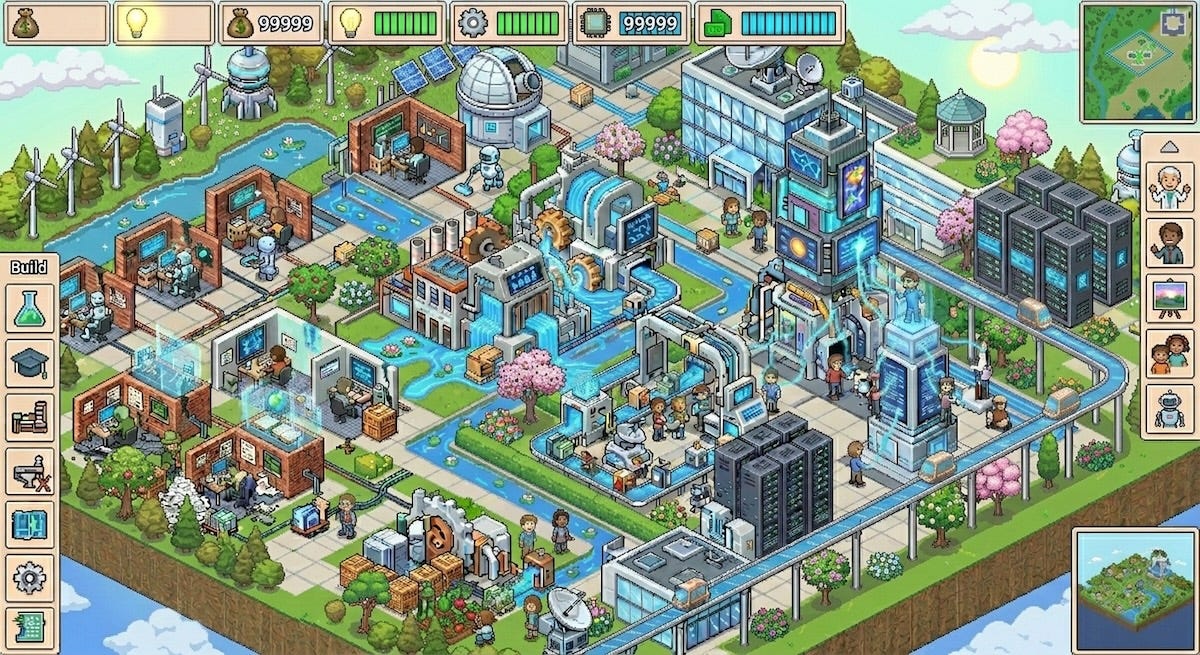
I used to roll my eyes a bit when tech luminaries proclaimed that we’ll “cure cancer in ten years”, because curing cancer has been ten years away for the last 50 years. But I recently listened to Demis Hassabis calmly state that we’ll likely “cure cancer in ten years” and thought to myself “yup, I can see how that might work out”.
Imagine every research scientist being able to build the exact software tools they need to analyze data, explore literature, and automate their grant processes.
Imagine massive systems to catalog, search, and cross-reference experimental data, allowing collaboration at a scale never before possible.
Imagine wet labs of completetly autonomous robots scaling up the experimental throughput of research labs by an order of magnitude.
And I haven’t even mentioned the (rapidly improving) AI working behind the scenes to suggest experiments, predict drug interactions, and help us more deeply understand genes and proteins, the very building blocks of life.
A massive effort, for sure, but suddenly all those tools and databases and robots don’t seem so hard to build if you understand that we’re entering the age of software abundance.
Software is a tool, and the primary job of a tool is to provide leverage (sometimes literally, as in the case of a lever). My friend, Dr. Steve Blum, is a brilliant cancer researcher. Steve’s work deals with massive amounts of data, and analyzing that data is a major bottleneck. But writing software to do so is extremely difficult, and there’s no world where Steve’s limited attention ought to be spent on python venv management.
The Software Industrial Revolution means that Dr. Blum and thousands of his colleagues have all, suddenly, almost magically, been given massive new leverage via the ability to conjure up almost any tool imaginable, on demand. This is like giving every cancer researcher in the world a team of world-class software engineers on staff overnight, for less than the price of Netflix. Frankly, I think this is nothing short of miraculous.
And even better, you don’t need to be rocket scientist or cancer researcher to do the same thing. Anyone, anywhere, can get AI to build them basically any digital tool they want if they have a little bit of patience and an open mind. Take this same idea and apply it to doctors, lawyers, small business owners and everyone else who’s ever needed a specialized tool for their specialized task.
And let’s not forget about the software engineers! Just as a paintbrush is used differently by a homeowner painting their ceiling than an artist painting a mural, these tools will be used to the greatest effect by professional software engineers who’ll be able to dramatically increase the breadth, depth, scale, and ambition of their work.
Imagine building every debug tool you’ve ever needed but couldn’t justify. Imagine cleaning up just some of that tech debt. Imagine porting critical libraries like LibSSL from unsafe C to safe Rust. Imagine actually making that game, that side project, that home automation. Imagine starting that business.
The Software Industrial Revolution will lead to an age of software abundance. But who that abundance falls upon will, of course, depend on who recognizes the change and seizes the opportunity.
What this means
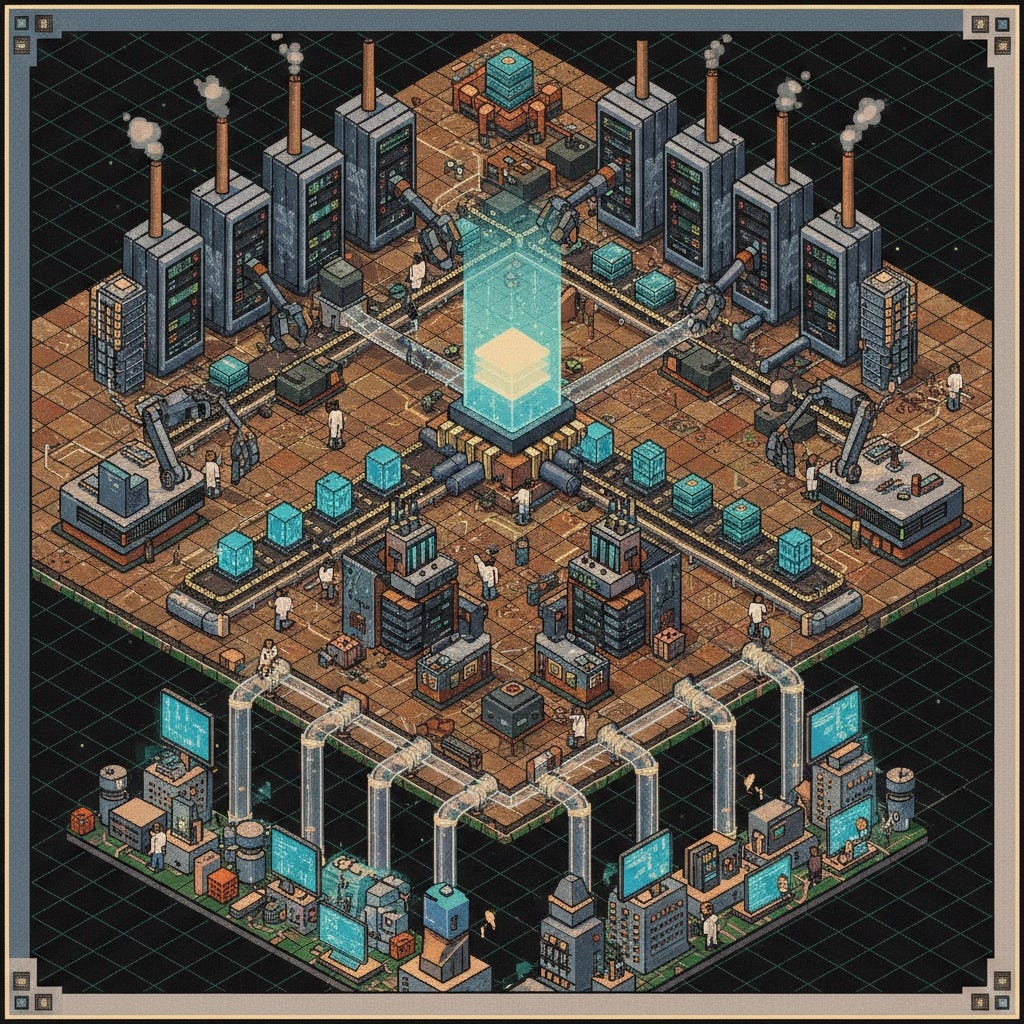
Dario Amodei recently said that 50% of entry-level jobs will be automated within the next 5 years. I’m still not sure what to make of this. On the one hand, the tech industry (among others) is already seeing fairly large drawdowns in new hiring. But it’s unclear how much of this is due to AI and how much of it is due to more general economic red lights (driven by a certain orange man). Counterintuitively, I believe it’s more likely that there’ll soon be significantly more demand for software engineers.
This is because the most likely impact of the Software Industrial Revolution is the same as the first Industrial Revolution: a massive decrease in the cost of production will lead to explosive growth in both supply, demand, and consumption.
When the cost of software decreases by orders of magnitude nearly overnight, a few things will hapen:
First, it changes how we build software. In practice, software engineering is very much about managing cost - balancing how much time, energy, and complexity needs to be spent for any given feature. There’s a reason we call it tech debt, after all. As software gets dramatically cheaper to build and maintain, the calculus will change and it will inevitably lead to us building much more software. There’s always infinitely more work to do than time, money, or people to do it.
Second, and more interesting, we’ll see big changes in how software is funded. This likely means the end of the modern VC era of software funding. Simply put: because it’s cheaper than ever to build, there’s little incentive for founders to exchange massive amounts of equity for money for building. This will (hopefully) lead to the reallocation of capital towards more real-world, physical applications. There’s already been a shift back to atoms in Silicon Valley and the Software Industrial Revolution will accelerate this trend.
-
Trying to predict the future is impossible - it’s much more important to be clear-eyed about the present. And a few things are as clear to me today as they were when I saw LLMs for the first time, knowing that the world has changed forever.
Software production will be rapidly automated, and it’s already happening.
It’s now possible to produce software dramatically cheaper and faster.
It’s now possible for anyone to produce software without software engineers.
Everything in AI could freeze today and these three facts alone would mean that the entire world is going to change and every penny of AI investment would have been worth it. And even though we don’t know where any of this ends, we know which way the arrow is pointing.
To all the software engineers: From students and those at the front of your careers, to the grizzled vets at the middle and end of yours, I want to say a few things.
The old golden age is over, and it ain’t coming back - no more “rest and vest”, no more ping-pong offsites and five-star catered lunches. But a new “golden age” is coming - no more nights staring red-eyed at empty stack overflow issues, no more weeks of alignment meetings to ship a prototype.
I believe it’s never been a better time to build - not just software but anything you can dream of. The world is yours if you embrace this new reality and learn how to really use these tools - building bigger things, better and faster, will still require a great deal of engineering, and your enthusiasm, energy, and, yes, experience will be your greatest assets. Use it. Embrace it. Scale your ambitions along with your expectations.
Because while the act of building software will fundamentally change, software engineering has never really been about producing code. It’s about understanding and modeling domains, managing complexity (especially over time), and the dynamic interplay between software and the real world as the system evolves. And while the ability to produce code by hand is rapidly becoming irrelevant, the core skills of software engineering will only become more important as we radically scale up the amount of software in the world.
A final story: Epic was founded in 1979 by Judy Faulkner, and has grown to become a dominant force in the healthcare industry. Because the software is so incredibly “sticky” (once a hospital installs it, they can’t really leave), Epic enjoys estimated profit margins of over 30%. As one financial analyst joked, achieving 30% margins in healthcare IT is “like running a casino in a church.”
Some numbers: Epic holds a staggering 42% of the US acute care hospital market, and their software manages roughly 55% of all hospital beds in the country. Mass General Brigham in Massachusetts spent $1.2 billion on their Epic rollout. The Mayo Clinic spent $1.5 billion. Kaiser Permanente spent roughly $4 billion. Once installed, hospitals have to hire armies of “Epic-certified” IT staff just to maintain the software. It costs a large hospital network tens of millions of dollars every single year just to keep it running.
As is the case for other tech monopolies, this situation isn’t great for anyone. Aside from the astronomical cost which drives up prices across the industry, Epic’s software itself is a mixed bag for doctors and patients. And this is all supposedly in service of an American health care industry that’s consistently been getting worse and more expensive for the better part of two decades.
This situation exists fundamentally because of the cost of software - it’s fantastically expensive to build software as complex as Epic’s, and this both crowds out competition and significantly drives up cost. We see this pattern everywhere: From Meta to Uber, from Microsoft to Oracle - the high cost of software drives monopolies, slows innovation, and makes everything more expensive.
Of course, Epic maintains massive incumbent advantages that have nothing to do with their software. But the cost of building software of this level of complexity is so high that it functionally nips competition in the bud. And this is true across many industries.
So what happens when software becomes dramatically cheaper via automation? What happens when software becomes truly abundant?
Before the Industrial Revolution, the average person owned only a few pairs of clothes, and many people spent the majority of their lives making those clothes by hand. Today, very few people actually make clothes but there are thousands of apparel companies for every type of activity - from skiing to nursing to firefighting - that would have been unimaginable before. Similarly, the Software Industrial Revolution will lead to an explosion of new bespoke software across every industry and niche, and the fact that we’ll no longer build the software by hand means that we’ll build and use much more of it.
In short, the Software Industrial Revolution won’t just disrupt tech: it will change healthcare, science, retail, agriculture, logistics, manufacturing, education, government... Everything in the economy touches software and the nature of software is about to fundamentally and radically change.
Welcome to the Software Industrial Revolution.